Who Stole Nasreddin Hodja’s DONKEY in Turin?
2026, 10’10”, 4k video. Courtesy the Artist and MAO Museo d’Arte Orientale
Driant Zeneli’s project reinterprets the traditional stories associated with Nasreddin Hodja and his donkey, bringing them into the contemporary urban context of Turin. A central figure in oral traditions spanning East and West, Nasreddin is an ambiguous and paradoxical character whose stories challenge established conventions, authority and common sense through irony and the reversal of expectations.
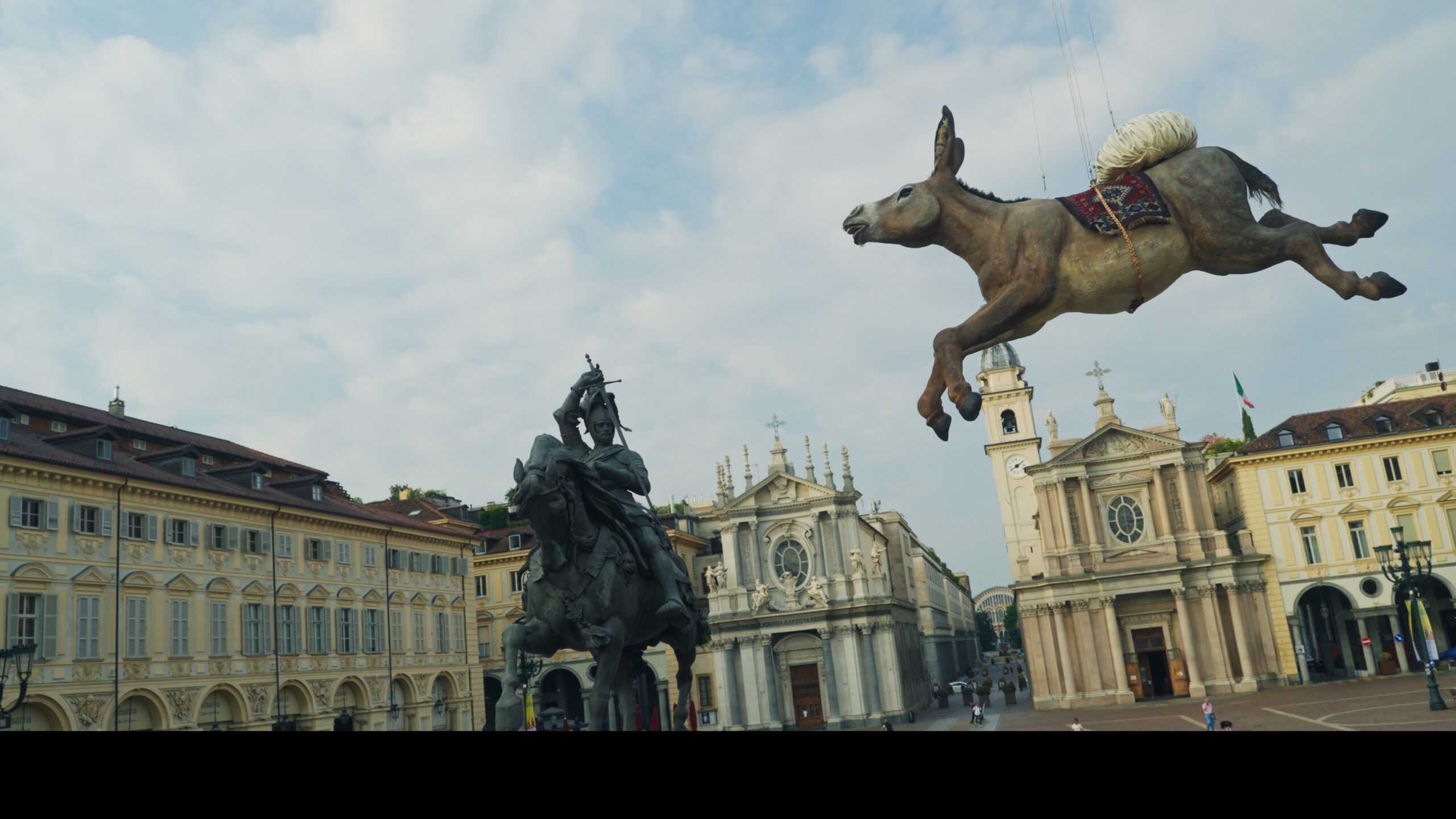
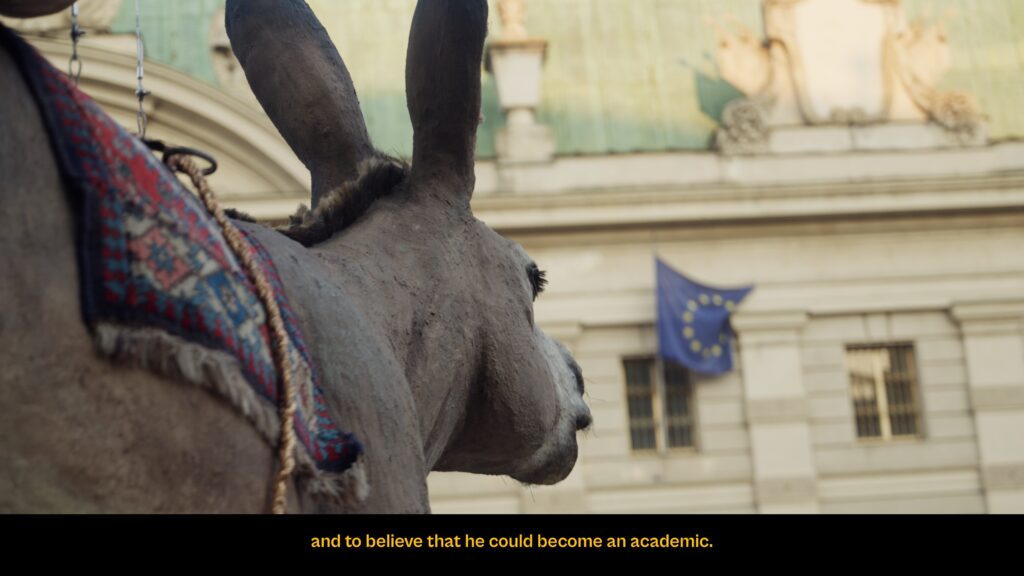
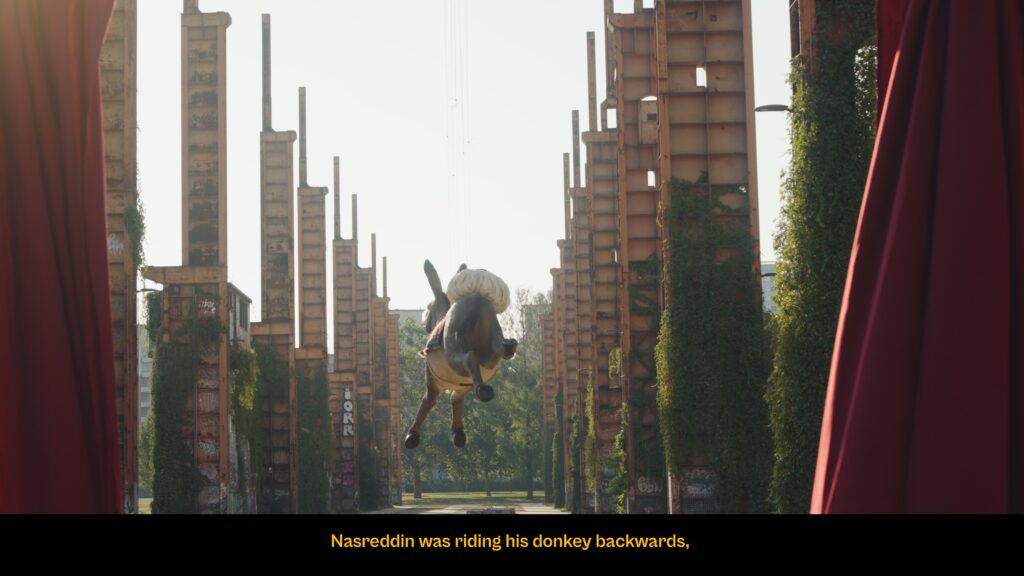
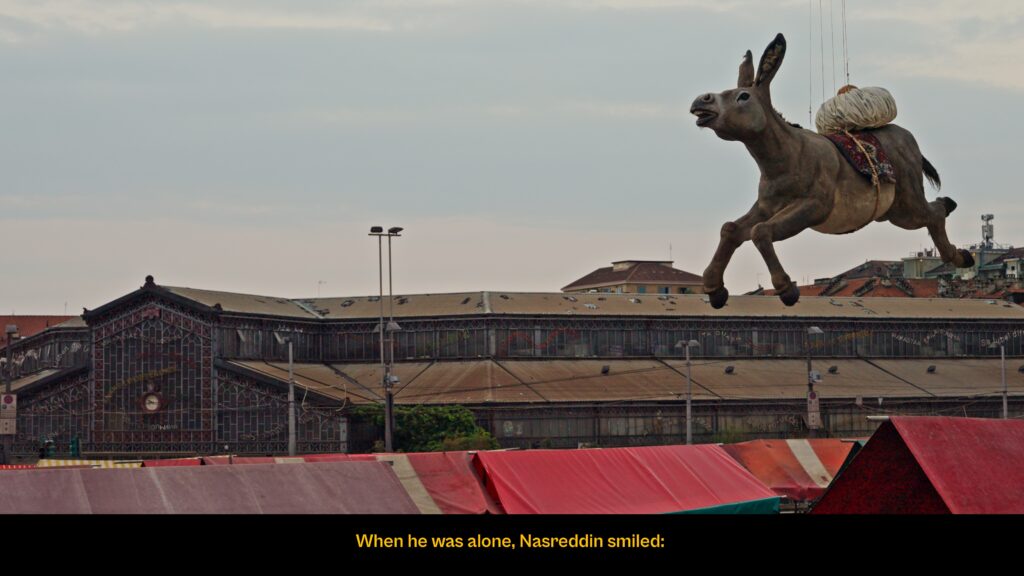
The work takes the form of a series of videos filmed in different locations across the city. Its protagonist is Nasreddin’s donkey, separated from his master and left to navigate Turin on a journey that leads him to the MAO Museum. As the donkey moves through the city, the urban landscape becomes more than a backdrop: it becomes a territory shaped by rules, boundaries and hierarchies, where the possibility of moving freely is never entirely separate from questions of power and belonging.
Traditionally associated with ignorance, stubbornness and slowness, the donkey acquires a different status in Zeneli’s work. Proud and audacious, he steps beyond the role assigned to him, becoming the protagonist of his own journey. No longer merely a companion, a means of transport or an instrument at the service of his master, he emerges as an autonomous presence. Conceived as a moving sculpture, he interrupts the ordinary rhythms of the city and unsettles the established relationships between subject and object, mobility and control, visibility and marginality.
The title, Who Stole Nasreddin Hoca’s Donkey in Turin?, introduces a question that remains deliberately unresolved. Rather than referring to a literal act of theft, it opens up a space of uncertainty around ownership, absence and the possibility of reclaiming what has been assigned to someone else. Who has the right to possess, use or determine the fate of another being? And what happens when the figure traditionally relegated to a subordinate position becomes the central presence in the story?
The donkey sculpture was created through a collective production process involving professors and students of the course for theatre and film set designers of Scuole Tecniche San Carlo in Turin
This shared process brought artistic practice into dialogue with collective participation, making the production of the work itself a space for collaboration and exchange.
Presented at the MAO Museum, the work enters into dialogue with the collections dedicated to Central and West Asia, the Arabian Peninsula and the Mediterranean. By bringing a figure rooted in a transnational oral tradition into the contemporary urban landscape of Turin, Zeneli connects different cultural geographies while questioning the boundaries through which identities, histories and forms of belonging are constructed. The donkey’s journey thus becomes an open-ended passage through the city, exposing the tensions between freedom and control, ownership and autonomy, and the individual and the structures that define their place in the world.
Declinazioni Contemporanee #4 site-specific commissions by MAO Museo d’Arte Orientale, Turin